
How Municipal Court Warrants Work
A municipal warrant grows out of a case a city court handles, usually an ordinance matter, a traffic ticket, or a failure to appear. Union County has two of these courts in the state directory: Union Municipal Court and Jonesville Municipal Court. Each keeps its own docket. Its orders may never show up on a Sheriff's public-information list. Neither city court publishes an online warrant lookup portal, so the court named on your citation or notice is the place to start. The clerk there can confirm current status or take a public-records request. Union County cases that belong to a Magistrate or General Sessions court go through the county system instead. One call to the right office saves a trip to the wrong one, and the clerk can tell you which file and process apply to your situation before anything else happens.
Municipal Courts Across Union County
Union County's state directory lists two municipal courts, Union and Jonesville. Carlisle and Lockhart do not appear in it. That gap is just a directory result, not proof those towns lack an ordinance procedure. If a notice came from Carlisle or Lockhart, ask the town which court or agency keeps the file. A county portal may not reach it.
| City | Municipal court | Local matter | Phone |
|---|---|---|---|
| Union | Union Municipal Court | City ordinance, traffic, bond matters | 864-429-1713 |
| Jonesville | Jonesville Municipal Court | Municipal cases and local traffic | 864-674-5746 |
| Lockhart | No entry located in reviewed directory | Ask town to route a notice | 864-545-2103 |
| Carlisle | No entry located in reviewed directory | Ask town to route a notice | Confirm with town |
The state directory image records the listed Union and Jonesville courts.
Check the South Carolina Municipal Court directory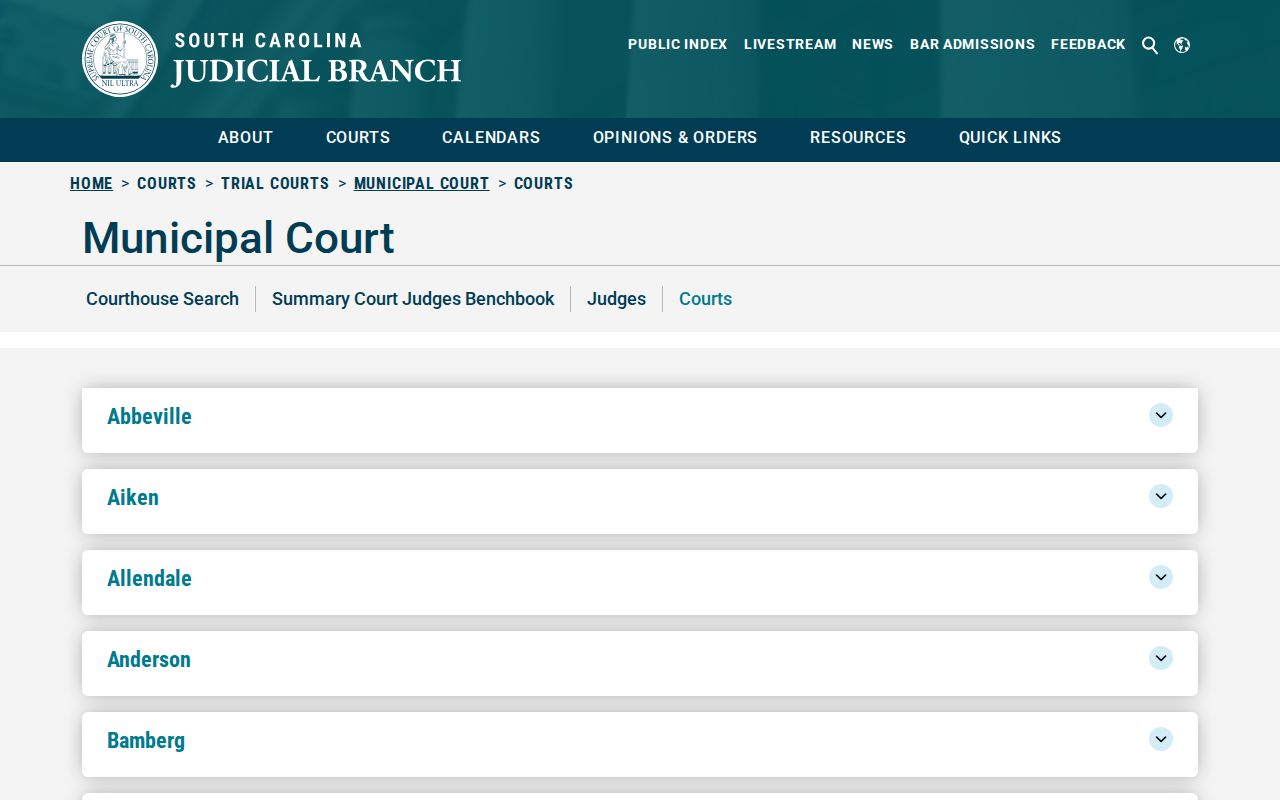
Use the current directory for routing, then call the court about an actual record.
Union County Municipal Warrant Checks
For a Union city case, the official city court page lists 864-429-1713 and holds sessions on Mondays and Thursdays. The state profile gives that same number but a different address, so call before you drive anywhere. Jonesville's state court profile lists 131 N. Main Street and 864-674-5746. The town police number is separate. Ask the municipal clerk or court coordinator whether staff can confirm a warrant, an appearance date, or a payment process for a Union County case. When requesting a public record, name the court, the document type, and the date range. The Sheriff's civil-process page handles service but posts no city-warrant name search. A Sheriff list cannot confirm every local court order.
Union Municipal Court Case Volume
The City of Union's municipal-judge page reports roughly 2,000 cases per year, with sessions on Mondays and Thursdays. That figure describes the city court's workload, not a warrant count. The page also says the municipal judge sets bond for municipal and General Sessions matters. Confirm current hours and case routing with the Union County court directly, since those details can shift.
A caseload number helps explain why a Union County city record may take a local call. It says nothing about how many warrants exist. Each traffic or ordinance case stays tied to its own docket.
Municipal Warrants: What They Show
A Union County city-court warrant record may list the municipal court, the case or citation number, the issuing judge, the basis, the date, and return or service details. The docket can also carry appearance and payment events. Details vary by court.
| Case reference | case number on notice Use only the number printed on an actual notice. |
|---|---|
| Court | Union Municipal or Jonesville Municipal Court, if named. |
| Case type | May relate to traffic, ordinance, or another local proceeding. |
| Order date | Shows when the court entered process; ask whether status later changed. |
| Service return | May be held by the Sheriff's Office or another serving agency. |
Only the issuing court can confirm whether a warrant remains in effect.
Union City Court Address Check
Two official sources give different addresses for Union Municipal Court. The city page lists 101 Sharpe Avenue and P.O. Box 987. The South Carolina Judicial Branch profile lists 215 Thompson Boulevard. Both list phone 864-429-1713, and the state profile adds fax 864-429-1728. Call before visiting. An old notice is not a reliable address source. The city page describes Monday and Thursday sessions year-round, but that schedule covers court, not necessarily clerk counter hours or records access in Union County. Ask whether you need an appointment and which entrance handles the file. A courthouse record may carry its own public-access rules.
Union County City Warrant Records
City courts and the Union County Sheriff fill different roles. A municipal judge issues city-court process. Local police may bring a case. The Sheriff can serve a warrant. A served-warrant count or a Most Wanted notice never captures every municipal order, so if a city case misses in a county search, call the city court named in the case. Public Index may show indexed court context, but it is not a complete municipal warrant list. The Sheriff links to a curated Most Wanted channel, not a full docket. For a wider view of Union County, start with the Union County warrant records home page and follow its court-by-court routing.
Jonesville Traffic Warrant Search
The state Traffic Ticket Search takes a citation number, a driver's license, or a name and date of birth, but its coverage PDF does not include Jonesville. For a local citation or a missed court date, contact Jonesville Municipal Court. The town police page lists a department contact at 864-674-5262; the court's own number is 864-674-5746. Police can route a question, but they are not a public warrant database. Union Municipal Court also sits outside that coverage list. A blank online result means you call the court, not that no record exists in Union County. Ticket status, appearance dates, payments, and warrant status are separate questions.
Union County City Warrant Access
South Carolina FOIA reaches records a municipal body in Union County holds, though it carves out law-enforcement material, private data, juvenile matters, and anything confidential. Keep your request narrow. Ask for the public portion of one court record, or for an aggregate count of active city warrants rather than the files themselves. A blanket demand for every open warrant will likely get trimmed or denied. If an office withholds something, it should tell you which exemption applies and release the segregable parts it can. One caution: the official directory only routes you. It does not promise that every file is public. Family Court records follow separate access rules, and private case values or personal identifiers pulled from a municipal document should not be published.
Clearing a Municipal Court Warrant
No Union County office posts a single pay-or-lift rule, payment plan, walk-in surrender protocol, or city-warrant recall fee. Call the court that issued the order. Ask what applies. The answer may be a scheduled appearance, bond, payment, motion, or a compliance step. The judge and the court order control the result, so paying a citation does not automatically mean the warrant was recalled.
Verify the court, current address, and next step before going in person. Ask a South Carolina lawyer if the notice may lead to arrest or an urgent court deadline.
"Capias" is not a controlling public-facing search label in Union County. It may still appear on a notice. Quote the term to the court and ask which local process it names. For a county warrant list, the Most Wanted page describes the Sheriff's curated channel and its limits.
Union County Municipal Warrant Route
Start with the court named on a Union or Jonesville notice. If no court is named, ask the town or city office which one keeps the file. Union County splits the rest by court. Summary court questions go to Union Magistrate Court at 864-429-1648. General Sessions and Family Court go to the Clerk at 864-429-1630. The Sheriff, at 864-429-1612, can explain its role in service. Each office answers a different question: a city clerk may locate a docket, and the Sheriff may hold a service return, but only the issuing court can explain the current order and its recall or payment terms. Confirm every detail against current official pages before a visit.